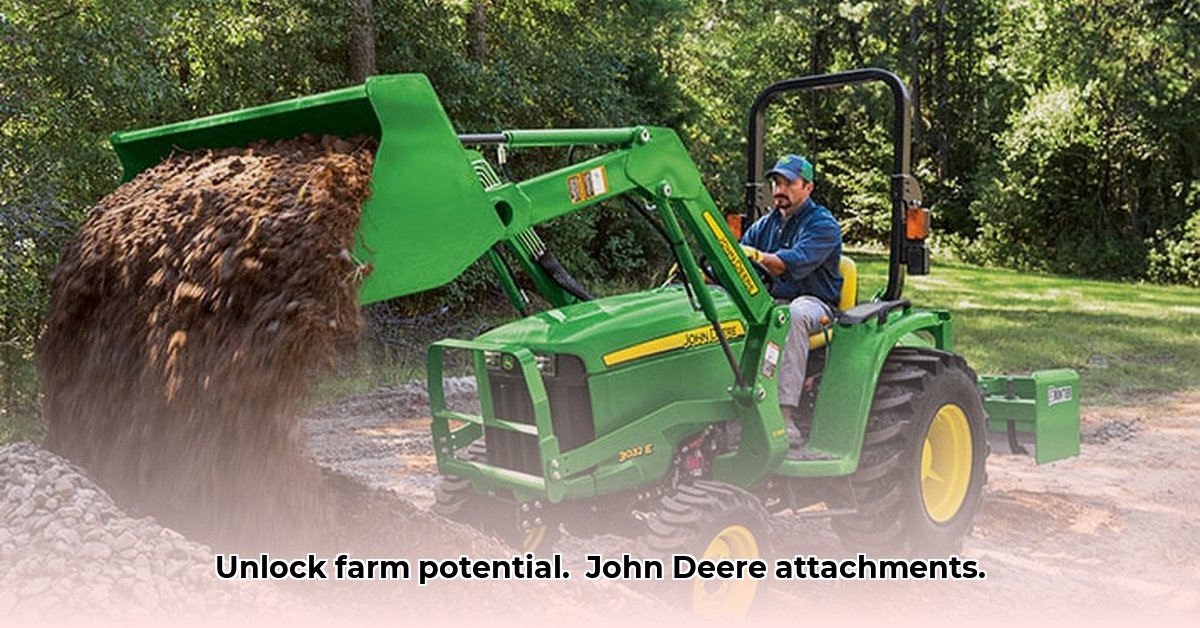
John Deere Small Tractor Attachments: Optimizing Farm Productivity
Choosing the right tools significantly impacts farm efficiency. John Deere's small tractor attachments offer a versatile solution for various tasks, from soil preparation to harvesting. This guide explores their capabilities, practical application, and the crucial balance between economic viability and environmental sustainability. For more compact tractor accessories, check out this resource.
A Comprehensive Overview of John Deere Small Tractor Attachments
John Deere's attachments are engineered for precision and performance, catering to diverse farm sizes and needs. Here's a look at key categories:
Tillers: Prepare the soil efficiently. The choice depends on your acreage and soil type, with larger tillers covering more ground, but potentially being excessive for smaller farms. (A larger tiller is faster but may be unnecessary for smaller plots.)
Mowers: Maintain fields and pastures. Rotary, flail, and disc mowers each offer unique advantages. Rotary mowers are versatile, while flail mowers handle tougher vegetation and disc mowers are ideal for hay fields. Terrain and grass type influence mower selection. (Steeper slopes need specialized mowers).
Loaders (Front-End Loaders): Essential for moving materials (hay bales, manure, feed). Lift capacity and reach are key factors. The higher the capacity, the heavier the load you can lift. (Consider the weight and distance for material handling).
Backhoes: Digging tasks like creating drainage ditches or setting fence posts become easier. Backhoe choice depends on digging requirements—depth, width, and soil volume. (Depth and width are crucial determining factors in backhoe selection.)
Specialized Attachments: John Deere also offers snow blowers, cultivators, and other specialized tools that cater to specific farm tasks and climatic conditions. (Specialty attachments extend capabilities for diverse needs).
Attaching and Operating John Deere Small Tractor Attachments: A Step-by-Step Guide
Attaching attachments is usually straightforward but demands careful attention to safety. Always follow your owner's manual before starting. Using a mower as an example:
Safety First: Engage the parking brake and disengage the PTO (Power Take-Off) before attaching or detaching any equipment.
Precise Alignment: Align the mower's hitch points with the tractor's hitch points. Ensure perfect alignment for stable operation.
Secure Connections: Insert and firmly secure all hitch pins. Double-check connections to prevent accidents.
Hydraulic Hookup (if needed): Connect hydraulic lines if required. Ensure proper alignment and check for leaks.
Test Run: Lower the mower and test its function. Check for binding or uneven lowering; adjust as needed before full operation.
Did you know that improper attachment can lead to a 15% increase in equipment damage and downtime? Prioritizing safety and precision is crucial.
The Economic and Environmental Footprint: A Balanced Perspective
John Deere attachments significantly improve efficiency. However, we must assess the broader picture, including environmental and economic factors.
Economic Advantages:
- Increased Efficiency: Complete tasks faster, saving time and labor.
- Lower Labor Costs: Automation reduces reliance on manual labor.
- Versatility: One tractor handles numerous tasks with different attachments.
- Higher Yields: Increased efficiency translates to greater yields and profitability.
Considerations:
- Initial Investment: The upfront cost of attachments can be substantial.
- Maintenance Costs: Regular maintenance is essential for optimal performance and longevity.
- Storage: Sufficient storage space is necessary for attachments when not in use.
- Environmental Impact: Manufacturing, transportation, and eventual disposal contribute to the overall environmental footprint.
"Responsible farming involves considering the entire lifecycle of equipment," says Dr. Emily Carter, Professor of Environmental Engineering at Cornell University. "From manufacturing to disposal, minimizing environmental impact is crucial."
Sustainability and Economic Viability: Informed Decision-Making
While efficiency gains are undeniable, sustainable practices are paramount. Minimizing the environmental impact necessitates responsible practices throughout the equipment lifecycle, from raw material sourcing to end-of-life management. Regular maintenance can extend the lifespan and minimize the need for frequent replacements.
Financing options, like leasing or payment plans, increase accessibility for diverse farm sizes. This ensures that small-scale farmers can also benefit from enhanced technology.
Troubleshooting, Maintenance, and Safety: Ensuring Operational Efficiency and Safety
Regular maintenance (cleaning, lubrication, inspection) is crucial for preventing costly repairs and ensuring equipment longevity. Always consult your owner's manual for specific guidelines. Prioritizing safety means never operating equipment if unsure about any part of the process. Always wear appropriate safety gear.
Remember, safe and responsible practices are essential for maximizing both productivity and sustainability. The long-term benefits outweigh any short-term inconveniences. What percentage of farm accidents are linked to inadequate safety measures? (Research suggests a significant percentage of farm accidents are avoidable with proper safety precautions).
Analyzing the Lifecycle Environmental Impact of John Deere Implements
Understanding the environmental footprint involves examining the entire lifecycle:
- Manufacturing: The energy and resources used in production.
- Transportation: The emissions from shipping and delivery.
- Usage: Fuel use, soil disturbance, and chemical application (if applicable).
- Disposal: Proper recycling or disposal methods to prevent landfill waste.
The environmental cost includes not only the energy used during operation but also the resources involved in manufacturing the equipment.
Balancing Economic and Environmental Factors: A Strategic Approach
Farmers face a trade-off between boosting productivity and minimizing environmental impact. John Deere’s commitment to sustainable technologies offers tools to navigate this challenge. A comprehensive cost-benefit analysis, potentially involving agricultural consultants, is essential when making purchasing decisions. Careful consideration of long-term savings (fuel, maintenance, potential chemical cost reductions) can help offset initial investment costs. Choosing responsibly contributes to a more sustainable future for farming and the planet.